Drinking water
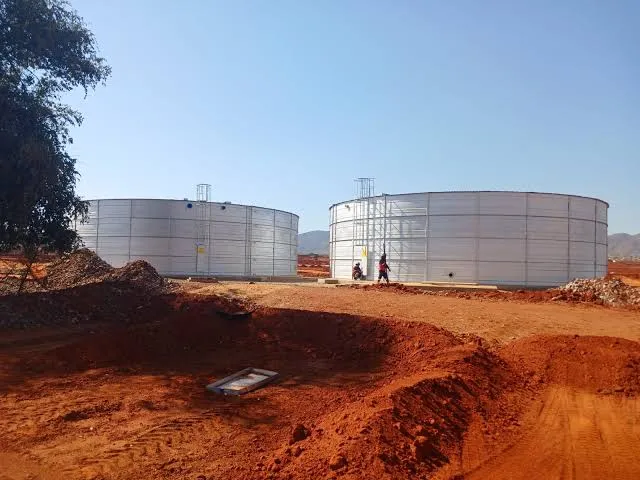
For potable water storage, the fundamental requirement is to ensure that the tank does not alter the water's physical, chemical, or microbiological characteristics. Therefore, certified epoxy finishes, stainless steel, and vitreous enamelled steel are the most appropriate solutions.
Vitreous enamelled steel stands out because its non-porous surface prevents chemical transfer and facilitates cleaning and sanitizing, while stainless steel—especially 316—provides maximum corrosion resistance without the need for coatings. In municipal projects requiring a long service life and low maintenance, these systems are particularly competitive in terms of their life cycle.
Cylindrical tanks offer additional advantages in terms of level changes and hydrostatic pressure, while rectangular tanks can be integrated into confined urban spaces or existing infrastructure.
Local health regulations may require certification of the coating, joint inspection, and inspection of anchors and covers. Likewise, auxiliary elements such as vents, valves, and level control systems must be selected to preserve the quality of the stored water.