Industrial Processes
Tanks for industrial processes must be designed considering the chemical nature of the fluid, temperature, abrasion, presence of solids, and potential pH variations. In this context, epoxy, stainless steel, and vitreous enamelled steel are the predominant coatings.
Epoxy allows for adaptation to a wide range of industrial fluids at a competitive cost, while stainless steel guarantees stability against chlorides, steam, or hygienic fluids. Vitreous enamelling is used when the fluid has extreme pH levels or contains aggressive components that could exceed the capacity of epoxy.
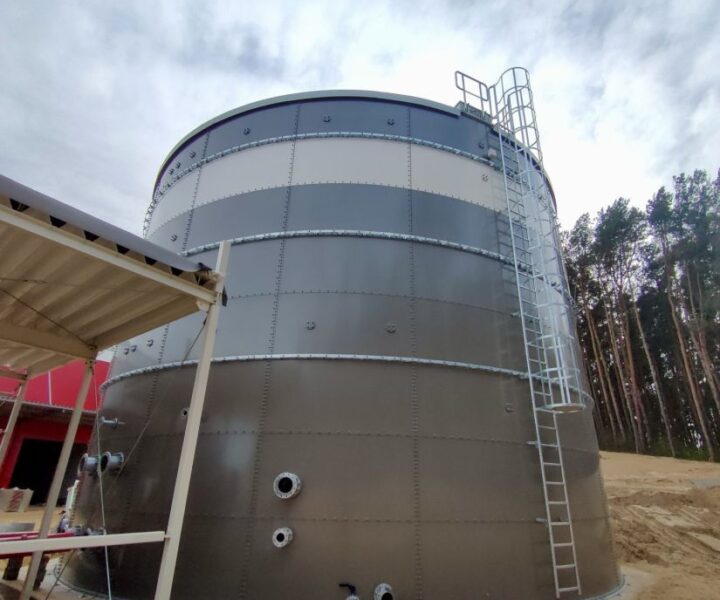
Structurally, rectangular tanks can be integrated into process lines, allowing installation alongside reactors, heat exchangers, or pumping systems. Cylindrical tanks, on the other hand, offer efficiency for large volumes with a reduced equivalent thickness.